7 Best Telescopes To See Saturn & Its Rings 2026; Reviews
Disclosure: This post contains affiliate links and I may earn a small commission (at no extra cost to you) if you click through and make a purchase. Thanks in advance – I really appreciate it!
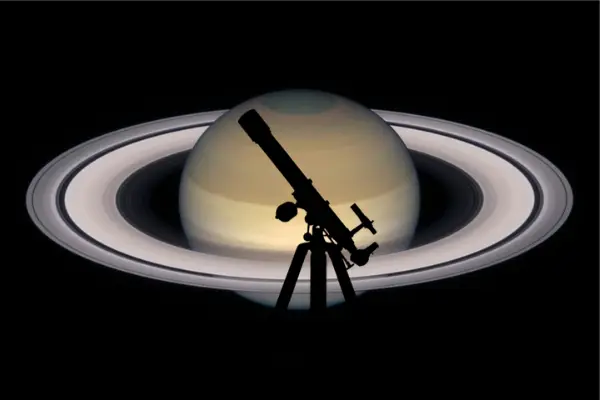
Here in this “Best Telescope To See Saturn” article we’ve rounded up 7 of the best telescopes of various types, specifications, and budget perfectly suited for viewing Saturn & its rings and other celestial objects. Below, you’ll find in-depth reviews of each, as well as an elaborate buying guide to help you pick out the one that suits you the most.
Our Top 3 Picks
Ask amateur telescope users what’s the most beautiful thing in the sky, and lots of them will say Saturn. In fact many say their first sight of it was what turned them on to astronomy.
Saturn looks starlike to the eye alone, but it shines steadily, as planets tend to do, and it has a distinct golden color. So Saturn is a lovely object to view with the eye alone. Binoculars will enhance its color, and the best telescope to see Saturn will show you it’s rings.
One of the best parts about planetary viewing or imaging is that since the objects are so bright, you can do it just about anywhere regardless of light pollution.
Combined with the fact that the planets are constantly changing, even from one night to the next, planetary astronomy is an easy way to enjoy the night sky whether you live in the middle of a bright city or countryside.
We have researched everything you need to know about buying a new telescope to see Saturn.
We have combed through the details and reviews for dozens of great models to find the best ones so you don’t have to.
We’ve also included a buying guide. If you want to learn more about telescopes before you buy, or just want to make sure you’re getting good value for your money, be sure to check it out.
1. Celestron NexStar 6SE Computerized Telescope
- ADVANCED TECH MEETS ICONIC DESIGN: The NexStar 6SE pairs Celestron’s legendary orange tube with a fully computerized GoTo system—ideal for those ready to step up from manual scopes and explore more of the night sky with precision and ease.
- 6-INCH SCHMIDT-CASSEGRAIN OPTICS: The large 6" aperture gathers enough light to reveal fine lunar details, cloud bands on Jupiter, and deep-sky objects like galaxies and globular clusters—all in a compact, portable form factor.
- FULLY AUTOMATED GoTo MOUNT WITH NEXSTAR+ HAND CONTROL: Use the NexStar+ hand control to select from a 40,000+ object database. The computerized mount then automatically slews to your target and tracks it—no star charts or manual alignment needed.
- FAST & EASY ALIGNMENT WITH SKYALIGN TECHNOLOGY: SkyAlign gets you observing fast—just center any three bright stars or planets, even if you don’t know their names. The system then calculates your position and aligns the mount in minutes.
- COMPATIBLE WITH CELESTRON ACCESSORIES: Easily upgrade your setup with all our latest accessories to enhance automation, wireless control, or location accuracy as your skills grow.
The Celestron NexStar 6SE Computerized Telescope is a standout choice for serious beginners and intermediate stargazers who want a blend of powerful optics and easy-to-use automation. Its 150 mm (6″) Schmidt-Cassegrain optical tube with StarBright XLT coatings delivers bright, high-contrast views of celestial objects, from crisp lunar craters to vibrant clusters and nebulae.
The included GoTo computerized mount accesses a database of over 40,000 objects and, thanks to Celestron’s SkyAlign system, makes locating and tracking targets very straightforward — even if you’re new to telescope astronomy.
When it comes to viewing Saturn and its rings, the 6SE performs impressively for its class. The 6″ aperture and long 1500 mm focal length allow you to easily spot Saturn’s iconic rings, and with the right eyepieces, many observers also make out the Cassini Division — the dark gap between the A and B rings — under steady sky conditions. You’ll also see planetary disks such as Jupiter’s cloud bands and Martian features when conditions cooperate.
While it won’t match the detail of larger telescopes, this model provides very satisfying planetary views that are bright and engaging for both first-timers and experienced hobbyists.
There are a few practical considerations worth noting: setup can take a bit longer than purely manual scopes because of the alignment process, and the mount runs on AA batteries, which tend to drain quickly unless you use an external power source.
The telescope also includes just a basic eyepiece — upgrading to a set of quality eyepieces will greatly enhance your viewing experience and make the most of the NexStar’s optical capability.
Overall, the NexStar 6SE strikes a compelling balance of performance, portability, and automation, making it a great all-around telescope for planetary observing and beyond.
2. UncleHu 150EQ Newtonian Reflector Telescope
- 150mm Large-Aperture Newtonian Reflector — Bright, Detailed Views: This 150mm Newtonian reflector with a 650mm focal length gathers ample light to deliver sharp, high-contrast views of the Moon, planets, and deep-sky objects. It’s an excellent choice for beginners and families looking for a capable first telescope, while also offering performance that meets the needs of users seeking an upgrade. The sleek, modern design adds a refined touch to any observing setup.
- Equatorial Mount for Accurate Tracking — Fine RA/DEC Control: The equatorial (EQ) mount aligns with Earth’s rotation, enabling smoother and more intuitive tracking of celestial objects. The latitude adjustment screw helps you fine-tune the viewing angle, while dual slow-motion control cables allow precise Right Ascension and Declination adjustments to keep your target centered throughout your observation.
- Stable Stainless Steel Tripod with Counterweight: The reinforced stainless steel tripod provides rigid, low-vibration support with an adjustable height range of 48.4–66.2 in (123–168 cm) for users of all ages. The counterweight balances the telescope tube for steadier, clearer views. The accessory tray keeps your accessories organized and within easy reach.
- Portable Carrying Bag — Safe Storage & Travel-Ready Design: The padded carrying bag protects all components while keeping everything neatly organized for worry-free storage. Easy to carry, it’s great for backyard observing, camping trips, school events, and dark-sky adventures. Enjoy astronomy anywhere with a setup that travels as easily as you do.
- Complete Accessory Kit — Easy Setup & Versatile STEM Learning: This telescope includes a detailed printed manual and requires no tools for quick assembly. 25mm and 10mm eyepieces plus a 2× Barlow lens for 26×–130× magnification, allowing easy switching between wide-field views and detailed close-ups. (Notice: This telescope may include one of two eyepiece sets; both versions are fully tested and deliver the same optical performance.) The 5×24 finder scope helps you locate and center targets quickly, the moon filter reduces glare for improved lunar contrast, and the phone adapter lets you capture and share memorable moments. Everything you need to begin exploring the night sky is included.
The UncleHu 150EQ Newtonian Reflector Telescope is a 150 mm (6-inch) aperture reflector on a manual equatorial mount that’s aimed at beginners through intermediate astronomy enthusiasts. With its large aperture and 650 mm focal length, this telescope gathers a strong amount of light, delivering bright, high-contrast views of the Moon, bright planets, and many deep-sky objects.
The package includes a solid stainless-steel tripod with a counterweight for steadier support, slow-motion control cables for precise pointing, and a padded carry bag for easier transport and storage — making it suitable for backyard observing sessions and trips to darker skies.
For planetary observing — especially viewing Saturn and its rings — the UncleHu 150EQ is quite capable for its price point. The 150 mm aperture gathers enough light and resolution to show the basic ring structure of Saturn and the planet’s disk under clear conditions, especially when paired with the included eyepieces or a slightly higher-quality set if you choose to upgrade.
While you won’t see the level of fine detail that larger or premium planetary telescopes deliver, many users find the view of Saturn’s rings satisfyingly visible and recognizable, making this a good introductory scope for solar system exploration.
On the practical side, this telescope comes with a decent accessory kit — two eyepieces (25 mm and 10 mm), a 2× Barlow lens (offering 26×–130× magnification), a 5×24 finder scope, a moon filter to reduce glare, and a smartphone adapter for basic astrophotography. The equatorial mount, once polar-aligned, allows smoother tracking of objects as Earth rotates, though new users may need some practice to master it.
Overall, the UncleHu 150EQ combines strong optical performance with a complete starter set, making it a good value choice for beginners and hobbyists who want a capable telescope without spending too much.
Related
3. Celestron – NexStar 127SLT Computerized Telescope
- COMPUTERIZED STAR LOCATING TELESCOPE: The Celestron NexStar 127SLT offers a database of more than 40,000 stars, galaxies, nebulae, and more. Simply choose an object and the telescope finds it for you in the night sky and tracks it as it moves.
- MAKSUTOV-CASSEGRAIN OPTICAL DESIGN: With a large, 127mm aperture, the NexStar 127SLT can gather enough light to see our Solar System and beyond. View Saturn’s rings, Jupiter’s cloud bands, the Moon's craters, and the Orion Nebula in brilliant detail.
- COMPACT AND PORTABLE: The ideal telescope for adults and kids to use together, the NexStar 127SLT is compact, lightweight, and portable. It's easy to transport just about anywhere—your favorite campsite, a dark sky observing site, or simply the backyard.
- FAST SETUP WITH SKYALIGN: Celestron’s proprietary SkyAlign procedure has you ready to observe in minutes. Center any 3 bright objects in the eyepiece and the NexStar SLT aligns to the night sky, ready to locate thousands of objects.
- BONUS FREE STARRY NIGHT SOFTWARE: Your Celestron NexStar 130SLT includes a free download of Starry Night Special Edition, one of the top-rated astronomy software programs. Simulate the sky, learn about celestial objects, & plan your observing session.
The NexStar 127SLT is a 127 mm (5″) Maksutov-Cassegrain telescope on a computerized GoTo mount that’s designed to make star-hopping effortless for beginners and casual observers. Its high-quality optical tube delivers crisp, high-contrast views of the Moon, planets, and brighter deep-sky objects, while the included SkyAlign technology lets you set up quickly by aligning on any three bright objects without needing to know star names.
The mount’s database of over 40,000 objects and intuitive hand controller mean you can point the telescope at pretty much anything in the night sky with just a few button presses — a major convenience over purely manual scopes. When it comes to viewing Saturn and its rings, the NexStar 127SLT performs quite well for its class. Its 1500 mm focal length and modest aperture provide enough magnification (with the supplied eyepieces) to clearly see Saturn’s iconic ring structure and, under steady skies, even hints of the Cassini Division. Planetary views through this Maksutov-Cassegrain are typically sharp and high-contrast, although upgrading eyepieces will noticeably enhance the clarity and detail you can observe — especially at higher magnifications near 150×–200×.
Many observers note that the telescope excels on bright solar system targets like Saturn, Jupiter, and Mars, making it a strong performer for planetary observing in its price range.
However, there are a few trade-offs to consider before you buy. The SLT mount, while computerized and convenient, can feel a bit underpowered and vibrates on lightweight tripod legs, especially at higher magnifications, so patience during focusing is important.
The GoTo system also relies on AA batteries, which can drain fairly quickly during chilly nights unless you use an external power source. Despite these limitations, the NexStar 127SLT remains a very capable all-around beginner to intermediate telescope, offering stunning planetary and lunar views in a compact, easy-to-use package that’s great for backyard stargazing.
4. MEEZAA 150EQ Telescope
- 150mm Large Aperture: This astronomical reflector telescope for adults features a 650mm focal length and 150mm aperture, delivering excellent light-gathering power for bright, clear images. Ideal for deep space observation, planets, and the Moon in stunning detail
- High Magnification & Clear Optics: Equipped with two eyepieces (25mm & 10mm) and a 2X Barlow lens, this telescope for astronomy beginners offers magnification from 26X to 130X. The red dot finderscope ensures fast targeting, while the moon filter reduces glare for comfortable lunar viewing
- Stable German Equatorial Mount: Upgraded Equatorial mount with precision dials and slow-motion control knobs provides smooth pointing and accurate manual tracking. Follow the Moon, planets, and stars across the sky with ease, perfect for beginners learning astronomy and advanced stargazers
- Sturdy Tripod & Carry Bag: Heavy-duty stainless steel tripod with adjustable height ensures stable viewing. A built-in accessory tray keeps eyepieces organized. All parts, including the telescope tube, fit into the carry bag for convenient storage and travel
- Complete Accessories & Easy Setup: Includes telescope tube, Equatorial mount, tripod, 2 eyepieces, 2X Barlow lens, red dot finderscope, moon filter, phone adapter, carry bag, and instructions. No tools needed, quick to assemble. Perfect telescope for adults, astronomy beginners, and families to enjoy stargazing together
The MEEZAA 150EQ is a 150 mm (6-inch) Newtonian reflector that’s packaged as a solid beginner-to-intermediate telescope for adults and families. Its large aperture and 650 mm focal length give it stronger light-gathering ability than many budget scopes, so objects appear brighter and more detailed — especially the Moon and brighter planets.
It comes with a German equatorial mount, two eyepieces (25 mm & 10 mm), a 2× Barlow lens, a red-dot finderscope, moon filter, smartphone adapter, and a carry bag, meaning you can start observing almost right out of the box. The equatorial mount’s manual slow-motion controls also help you track objects smoothly once you’re familiar with basic astronomy techniques.
For viewing Saturn and its rings, this telescope is quite capable for its price and class. The 150 mm aperture gathers enough light to make planetary features stand out, and under dark skies many users report being able to see the distinct ring structure of Saturn and surface details on Jupiter and Mars with the included eyepieces or slightly better ones.
While it won’t rival larger or higher-end planetary telescopes, the combination of aperture and magnification range (roughly 26×–130×) delivers satisfying planetary views that are sharp and bright enough to be exciting for beginners and hobbyists.
There are a few trade-offs to be aware of: as with most bundled beginner telescopes, the basic eyepieces and accessories aren’t top-tier, so upgrading eyepieces later can noticeably improve clarity and contrast. Also, the equatorial mount requires some learning to use effectively if you’re new to manual tracking, and achieving the highest useful magnifications depends on steady skies and careful focusing.
Still, for someone starting their stargazing journey — especially with an interest in planetary observation like Saturn’s rings — the MEEZAA 150EQ delivers excellent value, solid performance, and plenty of potential to grow with your skills.
5. Celestron StarSense Explorer DX 5″
- SMARTPHONE-POWERED SKY TOUR: No experience needed! Just dock your phone, launch the StarSense Explorer app, and follow the on-screen arrows to locate stars, planets, nebulae, and more.
- PATENTED STARSENSE TECHNOLOGY: Unlike other astronomy apps, StarSense Explorer uses sky recognition technology to turn your phone into a celestial navigation system, analyzing star patterns overhead to pinpoint your telescope’s position.
- TONIGHT’S BEST TARGETS, INSTANTLY: The app generates a curated list of the top objects to see based on your time and location. See planets, bright nebulae, galaxies, and star clusters from the city—and even more from dark skies.
- SIMPLE SETUP, SMOOTH TRACKING: Features a manual altazimuth mount with dual-axis slow-motion controls. Follow the on-screen arrows to your target; when the bullseye turns green, you can view it clearly through the eyepiece.
- 5-INCH SCHMIDT-CASSEGRAIN WITH IMPRESSIVE VIEWS: The 130mm optical tube with StarBright XLT coatings delivers sharp, vivid views of the Moon, planets like Jupiter and Saturn, and deep-sky favorites like the Orion Nebula and Andromeda Galaxy.
The Celestron StarSense Explorer DX 5″ is a well-rounded Schmidt-Cassegrain telescope designed to make deep-sky and planetary observing easier for beginners and casual astronomers. With its 125 mm (5″) aperture and compact optical tube, this scope collects plenty of light for bright, detailed views of the Moon and brighter planets while still being portable enough to set up in a backyard or take on trips.
A key feature is Celestron’s StarSense technology, which uses your smartphone’s camera and sensors to help you locate and center astronomical objects in the eyepiece — a significant advantage if you’re new to starhopping or don’t want to struggle with manual finding.
For planetary observing, including Saturn and its rings, this telescope performs quite effectively for its class. The SCT optical design — known for high contrast and sharp images — paired with a moderate focal length means you’ll see Saturn’s ring system, the planet’s disk, and some atmospheric details on Jupiter and Mars under steady skies when using the right eyepiece and sufficient magnification.
While views won’t rival larger scopes designed specifically for high-resolution planetary work, many owners find the Saturn experience rewarding and clear enough to appreciate the ring structure and occasional Cassini Division detail with good seeing conditions.
That said, there are some practical considerations. The telescope’s mount and tripod — especially if lightweight — can introduce vibration at high magnifications, so letting the tripod settle and focusing carefully becomes important for crisp planetary views. Also, while StarSense greatly simplifies finding objects, the telescope still benefits from decent eyepieces (often upgraded by users) to maximize clarity and detail on bright targets like Saturn.
Overall, the StarSense Explorer DX 5″ delivers excellent value for beginners or intermediate observers who want solid lunar and planetary performance with helpful tech assistance.
6. Sky-Watcher ProED Doublet APO
- SMARTPHONE-POWERED SKY TOUR: No experience needed! Just dock your phone, launch the StarSense Explorer app, and follow the on-screen arrows to locate stars, planets, nebulae, and more.
- PATENTED STARSENSE TECHNOLOGY: Unlike other astronomy apps, StarSense Explorer uses sky recognition technology to turn your phone into a celestial navigation system, analyzing star patterns overhead to pinpoint your telescope’s position.
- TONIGHT’S BEST TARGETS, INSTANTLY: The app generates a curated list of the top objects to see based on your time and location. See planets, bright nebulae, galaxies, and star clusters from the city—and even more from dark skies.
- SIMPLE SETUP, SMOOTH TRACKING: Features a manual altazimuth tabletop Dobsonian-style base. Follow the on-screen arrows to your target; when the bullseye turns green, you can view it clearly through the eyepiece.
- 130MM REFLECTOR WITH IMPRESSIVE VIEWS: The 5" Newtonian reflector with high-reflectivity coatings delivers sharp, vivid views of the Moon, planets like Jupiter and Saturn, and deep-sky favorites like the Orion Nebula and Andromeda Galaxy.
The Celestron StarSense Explorer 130mm Tabletop Dobsonian is a compact yet capable Newtonian reflector telescope with a 130 mm (5″) aperture that delivers bright, detailed views of celestial objects. What sets it apart from many beginner scopes is StarSense Explorer technology, which uses your smartphone and the StarSense app to help you locate and center objects in the sky by analyzing star patterns in real time — essentially turning your phone into a guided finder for the telescope.
This feature makes stargazing much more accessible for beginners who struggle with traditional star-hopping and finding targets manually.
When it comes to **planetary observing and specifically viewing Saturn and its rings, the StarSense Explorer 130mm does a very respectable job for its class.
The 130 mm aperture gathers plenty of light for bright, sharp views, and under decent sky conditions you will be able to discern Saturn’s ring system and the planet’s disk with satisfying clarity. While a tabletop tabletop Dobsonian won’t deliver the extreme magnification or fine detail of larger, premium telescopes, many users find the planetary views surprisingly impressive for a portable setup — bright enough to enjoy Saturn and easily see lunar details, Jupiter’s bands, and star clusters through the eyepiece.
On the practical side, this telescope is praised for its stable tabletop Dobsonian base, which feels more solid than flimsy tripods and makes high-power viewing less shaky. The included eyepieces typically cover low- and mid-range magnifications, and some owners choose to upgrade eyepieces over time for even better detail on planets.
A few users note that assembly instructions can be confusing and that smartphone integration depends on the phone fitting correctly and the app functioning smoothly, but overall it’s considered a great value for a guided, beginner-friendly telescope that gives good deep-sky and planetary performance — especially for enthusiastic newcomers and families.
7. Sky Watcher Sky-Watcher Classic 250 Dobsonian
- LARGE APERTURE: Get a bright, bold viewing experience at a fraction of the cost of other optical designs.
- PROPRIETARY TENSION CONTROL HANDLES: These patented handles allow for accurate movement without the need for perfect balance.
- 94 percent REFLECTIVE MIRRORS: Fully multi-coated borosilicate primary and secondary mirrors deliver exceptional views.
- TEFLON BEARINGS: Proprietary Teflon bearings ensure smooth azimuth movement.
- COMES COMPLETE: All accessories such as, 2-inch Crayford-style focuser with 1 1/4-inch adapter, two super wide-angle eyepieces (25mm and 10mm), and 9x50 straight-through finder scope are included with purchase.
The Sky-Watcher Classic 250P 10″ Dobsonian is a traditional Newtonian reflector telescope built around a large 254 mm (10-inch) aperture with a 1200 mm focal length and an f/4.7 focal ratio — a classic “light bucket” design that gives you bright, detailed views of celestial objects without electronics or complex setup. Its parabolic primary mirror with high-reflectivity coatings pulls in a lot of light, making it excellent for deep-sky observing while still performing very well on brighter targets like the Moon and planets.
The simple Dobsonian mount with Teflon™ bearings and a tension-control handle lets you smoothly point and lock the telescope on objects with minimal fuss, so you can spend your time observing rather than wrestling with hardware.
For planetary observing — including Saturn and its rings — the Classic 250P really shows its strength. The large 10″ aperture and long focal length translate to good resolution and light gathering, so under decent sky conditions you’ll see clear, bright views of Saturn’s ring system and the planet’s disk when using higher-power eyepieces. While Dobsonians like this don’t have tracking motors, once Saturn is centered in the eyepiece it’s easy to keep it in view with a gentle nudge, and the steady performance rewards careful focusing.
The telescope’s capability also means you get excellent views of Jupiter’s cloud bands, the Moon’s craters, and even star clusters and nebulae that are often washed out in smaller scopes.
On the practical side, the Classic 250P is both a joy and a handful: its simplicity means virtually no setup time and very few parts to fuss with, but at ~28 lb (tube alone) and with a relatively large base, it isn’t a grab-and-go unit if you have limited space or strong winds. The included eyepieces and 9×50 finderscope are functional for getting started, though most observers eventually choose better eyepieces or a reflex finder to improve ease of targeting and clarity at high magnifications.
Whether you’re dipping your toes into astronomy or ready to move beyond small beginner scopes, this telescope delivers exceptional visual performance and tremendous value for the aperture — especially if your goal is rich, high-contrast views of planets and deep-sky objects alike.
Best Telescope To See Saturn - Buying Guide
Buying a telescope for home use is an important step towards a new level of appreciation for the night sky, and the wonders found within it.
Buying a telescope to see Saturn and other celestial bodies is an important step towards a new level of appreciation for the night sky, and the wonders found within it.
The best telescope to see Saturn is one that guides you and your family through the process of learning the night sky in a straightforward and gratifying way. It’s easy to get swept away with an optical instrument that is likely too complex for kids or other members of your family at home to learn early on.
Features To Consider When Choosing A Good Telescope To See Saturn
Aperture
Aperture is the diameter, usually measured in millimeters, of the objective (primary) lens or mirror of the telescope. Essentially, the larger the aperture, the brighter images will appear, and the deeper into space you will be able to see.
Focal Ratio
The focal ratio (f/5.9 for example) is the ratio between the aperture and the focal length. Multiply the aperture by the f ratio to find the focal length.
Focal Length
The focal ratio (f/5.9 for example) is the ratio between the aperture and the focal length. Multiply the aperture by the f ratio to find the focal length.
Magnification
To get an image suitable for observing with our eyes, a telescope uses a second lens, or collection of lenses, called an eyepiece at the focal plane. The eyepiece magnifies the image from the objective.
The eyepiece also has a focal length. The magnification of a telescope and eyepiece is very simple to calculate. If the focal length of the objective is “F” and the focal length of the eyepiece is “f”, then the magnification of the telescope/eyepiece combination is F/f. For example, if a telescope has an objective lens with focal length of 1200 mm (about 48”) and it has an eyepiece of focal length 25 mm (about 1”), then it will have a magnification of 1200/25=48x.
Eyepieces
Eyepieces determine the magnification and field of view of a telescope. Different eyepieces are used to view different objects.
Some objects, such as nebulae and star clusters, appear quite large and are best viewed at low magnifications (which give a wider field of view), whereas planets appear very small and are normally viewed with high-magnification eyepieces.
Most telescopes come supplied with one or two eyepieces. Ideally, you’d like to have a set that spans a range of magnifications.
You can expect to spend anywhere from $40 to $250 on a good eyepiece.
A Barlow lens is also worth considering: it multiplies each eyepiece’s power by two or three times, effectively doubling your eyepiece collection.
Finderscope
A good finderscope is essential for any telescope. It brightens and magnifies the view, allowing you to find things beyond the naked-eye limit.
When properly aligned, a finderscope also allows you to point a telescope more precisely than do peep sights or reflex finders. This is especially important whenever you’re aiming at a blank point in the sky where your charts tell you an interesting, faint object ought to be.
Types Of Telescopes
Refractor Telescope
When most people think of a telescope, the refractor type is what’s going to pop into their minds. This kind of telescope uses a lens to focus light on a single mirror, which is angled to direct the light through an eyepiece into your eye.
The simplicity and reliability of the design makes it easy to use and requires little maintenance. These are excellent for observing objects, planets, the Moon and the galaxies.
Since the optical system is basically a straight line, there are no obstructions from secondary mirrors as there are in Newtonians or catadioptrics.
Reflector Telescope
Reflector telescopes feature a clear piece of glass or plastic at the front of the tube. These don’t warp the light, so they aren’t lenses, but instead a protective shell to keep dust out.
A mirror sits at the back of the tube. It’s curved to focus light on a second mirror, which directs light through the eyepiece and to your eye.
Reflector telescopes are easily identified by the fact that the eyepiece is found near the telescope’s front. These tend to be the least expensive, and you can get larger apertures for a lower price than with other models. The one downside to reflector telescopes is that they must be calibrated regularly in a process called “collimation.”
Compound Telescope (Catadioptrics)
Compound telescopes use an initial lens to focus light onto a mirror at the back of the telescope. The mirror focuses light onto a smaller mirror mounted on the back of the lens, which directs light through a tube that runs through the center of the first mirror and out the back of the telescope.
Compound telescopes are very lightweight relative to other types, and they don’t require collimation like reflector telescopes do.
How to Find Saturn in the Night Sky Without A Telescope
The position of the planet Saturn in the night sky changes over time. It is orbiting the Sun just as Earth is, except that it takes Saturn 29-years (Earth years, of course), to complete its orbital period around the Sun.
The position of Saturn in your night sky will also depend on your location on Earth. Saturn is not always visible to everyone on Earth, because sometimes it lies too close to the Sun from our vantage point on Earth to view at night.
How To Find Saturn On Your Phone
To find the current location of Saturn, We suggest using an astronomy app such as Gas Giants or Star Walk 2 on your mobile phone with a Stellarium planetarium simulator. This will show you exactly where to look for Saturn from your location.
These apps can show you what’s in the sky and their exact position in real-time. Use the search function and enter the celestial object you wish to find, it will point you in the right direction. It’s easy and will save you some time. Once you know what you are looking out, point your telescope towards it and enjoy the view.
How To See Saturn’s Moons With A Telescope
Saturn has over 80 known moons, and 53 of them are officially named. Its biggest moon, Titan, is larger than the planet Mercury (but much lighter, due to its high ice content). Saturn also hosts six more good-size moons and dozens of house-size moonlets.
You can easily see Titan through a backyard telescope, plus three or four of the next largest, depending on the telescope’s aperture.
Even though Titan is far away, it’s large size means it’s a fairly bright and easy telescope target. A 6-inch or larger telescope may show the color of the dense yellow-orange clouds on this large 8th-magnitude moon,
This orange-brown target shines with a magnitude between 8.2 and 9.0 and orbits Saturn every 15 days.
To identify the moons using a sky-charting app like SkySafari 5, Star Walk or Stellarium Mobile, center Saturn and zoom in until you see the moons displayed. If the app time is set to Now, it will match what you see in your telescope, except for any image inverting or mirroring your telescope’s optics might introduce.
The Saturn Moons and Gas Giants apps for iOS are designed to provide realistic views of the planet and moons at any time you choose. They incorporate buttons to flip the view to match your telescope’s optics.
Saturn’s moons are worlds unto themselves — massive enough to have geologic activity, interesting terrain, subsurface liquid saltwater oceans and even atmospheres.
Conclusion
The Celestron NexStar 6SE Computerized Telescope stands out as one of the best telescopes for viewing Saturn and its iconic rings. Its 6-inch Schmidt-Cassegrain optics deliver bright, high-contrast planetary views, and the computerized GoTo mount makes locating and tracking Saturn effortless — even for beginners. With the right eyepieces, you’ll clearly see Saturn’s rings and subtle details like the Cassini Division under steady skies, making the NexStar 6SE an excellent all-around choice for anyone serious about observing Saturn.
Written by:
Chandrashekhara Rao
I grew up in a rural community with a dark sky, and that is where I learned to appreciate planets and stars at an early age. I have been fascinated with all things astronomical since I was a kid and started with a cheap-and-cheerful 60mm refractor on a wobbly tripod.
ABOUT US
We are a team of active amateur astronomers, here to help you with all your astronomy and science related needs – this is anything, from reviewing the latest telescopes to be released to talking about gravity and neurons. The Big Bang Optics was started because of our love for astronomy and to help others like us find the best telescope and accessories.
LEGAL DISCLAIMER
The Big Bang Optics is a participant in the Amazon Services LLC Associates Program, an affiliate advertising program designed to provide a means for sites to earn advertising fees by advertising and linking to Amazon.com. The Big Bang Optics also participates in affiliate programs with Clickbank and other sites. The Big Bang Optics is compensated for referring traffic and business to these companies.